Who cares about Neighbouring Rights? We do…
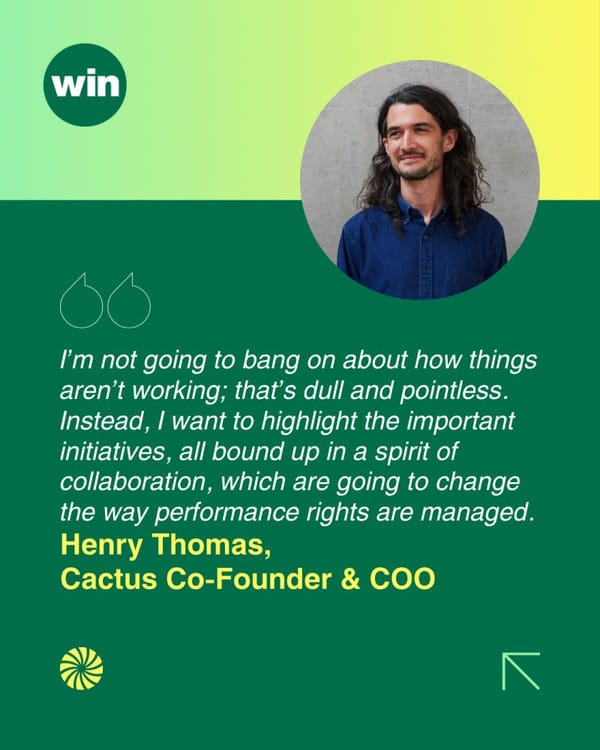
Welcome to the first “proper” blog entry from SoundAct. We’ve already re-posted Henry’s excellent piece for the WIN Annual Report 2025, but this is the first entry into a blog which will attempt to provide some unbiased insights into the Neighbouring Rights market and tackle misconceptions and things that we, as independent advisors, feel performers and record labels should be aware of.
Firstly, I’m not going to go into too much detail as to exactly what Neighbouring Rights (NR) are (unless there’s demand). There are dozens of well written explanations online already which do a good job of setting the scene.
In case you’re unfamiliar with SoundAct, we are a Neighbouring Rights consultancy formed in 2019 by three senior professionals with over 40 years of experience between us. When we started SoundAct we wanted to offer artists and labels an alternative to the historic approach towards NR collection. We felt that there was little true transparency (despite the word being used heavily) with regard to the work being undertaken, the data received and the payments being made. We felt artists and labels deserved an alternative to the cookie-cutter approaches that exist in the industry. We believed that creators should have an option to build a long-term, strategic approach to NR collections, and have an in-house set up so that they don’t have to press the reset button every few years if they think something may not be working out. We wanted to ensure a level playing field for creators regardless of their level of commercial success and, as this blog aims to do, quash myths and ease fears.
We have also developed Cactus, a bespoke NR platform, which provides users the tools, guidance and information that was previously only afforded to large organisations. You can find out more at cactusnr.com.
So why, as a performer on a sound recording or the owner (or exclusive licensee) of a sound recording (or video), should you care about NR? Well, the obvious answer is money.
There is money out there. NR accounts for close to 10% of global revenue within the recorded music industry. It generates more stable income than sync, for example, and collections continue to grow. It’s a relatively stable, albeit not always consistent, revenue source which is constantly growing. Established societies continue to grow their licence fees at the same time as newer territories develop theirs.
You’d have heard about these mysterious “Black Boxes”, and whilst the term may not be a perfect description, a society does hold unclaimed revenue for a period of time (this varies society by society), as it does on recordings with unresolved rights conflicts (disputes) and data quality issues. They want to distribute that revenue; they just don’t know who to distribute it to.
Collective Management Organisations (CMOs), which sometimes refer to themselves as Music Licensing Companies (MLCs) – let’s just call them societies for ease – are developing very quickly in comparison to a decade ago. New markets are emerging (don’t expect a fountain of cash to suddenly appear, but a bit of something is better than a bit of nothing, right?) and the more developed societies are using technology to improve not only their work flows, but the experience for their members – which is something that has arguably held them back in the past. Examples of this are RDx (see Henry’s article in the WIN annual report 2025) and SENA’s new functionality that allows a performer to claim via a Spotify search.
Technology is also at the heart of ensuring that the money is coming in correctly, as well as being paid out correctly. Airplay monitoring and data matching technology should mean increased accuracy and faster distributions, and it’s important that we all pull together to encourage and assist societies toward this, whilst at the same time remembering that a society needs to keep their costs down in order to pay their members (you) more.
Now is the time to make sure you’ve got your NR in order and at SoundAct we strongly encourage creators to ask questions of their local collection society or appointed NR representative. Regrettably there are still some bad actors, poor data quality, “throw it at the wall and see what sticks” approaches, and performers and rightsholders are imperative to that being resolved. If you want to really make the most of what NR has for you, you should be demanding more from those representing your rights.
We will write future articles about specific areas (ideas welcome), including the NR market in general, awareness of royalty dilution, performer qualification, developments and obstacles. Stay tuned for more!